← Learning Guides
A Clearer Start

How Much Cash Do You Really Need To Buy A Rental?

A down payment is only the beginning. Build a complete starting budget for closing costs, initial repairs, and a cash buffer before comparing properties.

4K Available · Captions Optional

Short Guided Video · Optional English Captions · Illustrative Examples

Read The Video Transcript

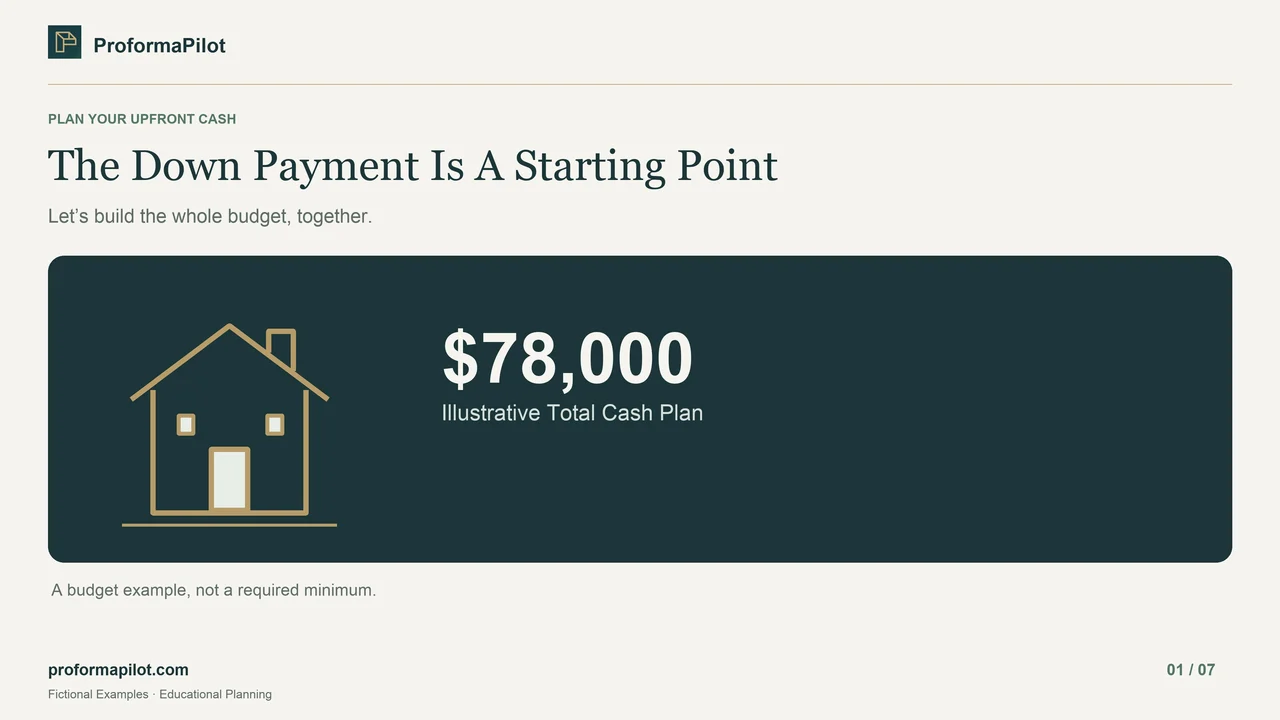
The Down Payment Is A Starting Point

The Down Payment Is A Starting Point: Let’s build the whole budget, together.
Step 1 · Illustrated Overview

Saving for a down payment of fifty thousand dollars? Let's look at the full budget together. For this fictional rental, our total cash plan is seventy-eight thousand dollars. We'll build that number step by step, so you can see where every part belongs.

Start With The Purchase

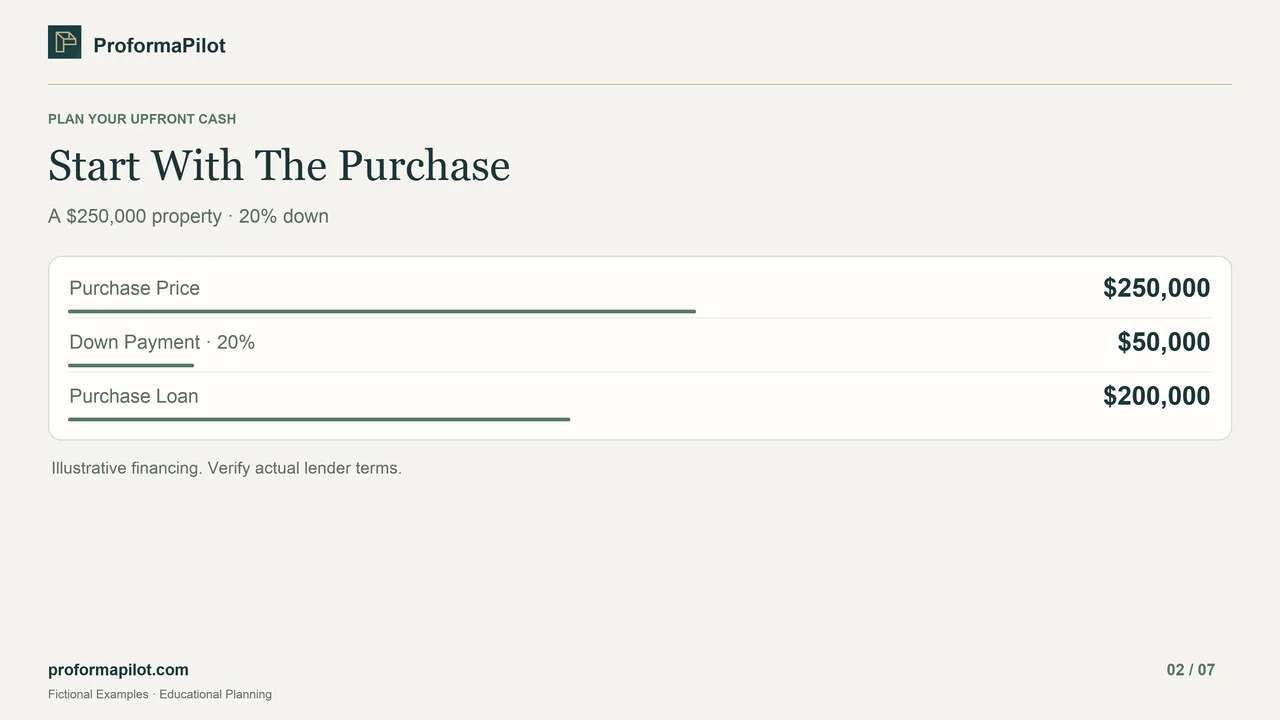
Start With The Purchase: A $250,000 property · 20% down
Step 2 · Illustrated Overview

On a two hundred fifty thousand dollar purchase, twenty percent down is fifty thousand dollars. The remaining two hundred thousand is the purchase loan. That down payment is cash you commit to the property. It does not include the other costs of getting the rental ready.

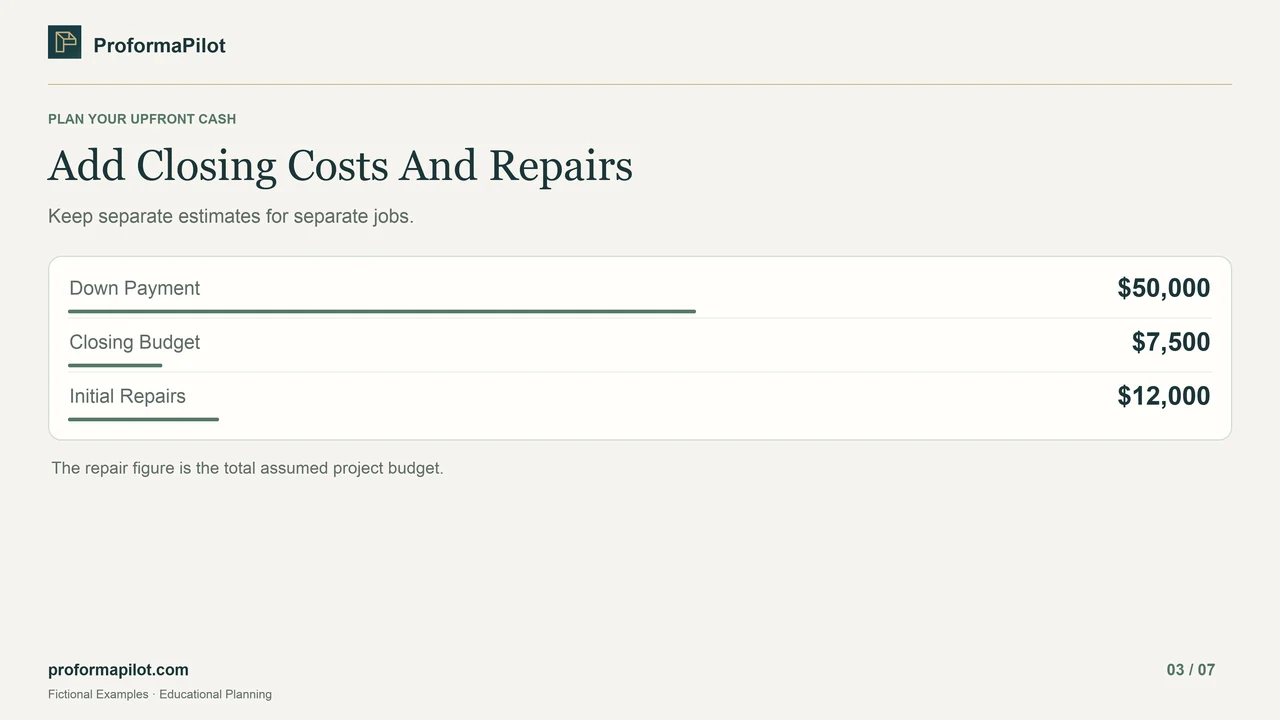
Add Closing Costs And Repairs

Add Closing Costs And Repairs: Keep separate estimates for separate jobs.
Step 3 · Illustrated Overview

Let's assume seventy-five hundred dollars for closing costs, prepaids, and initial escrow funding, plus twelve thousand for repairs. Use the lender's documents and contractor estimates to refine those amounts. Include each cost once, and add a repair contingency when your project calls for one.

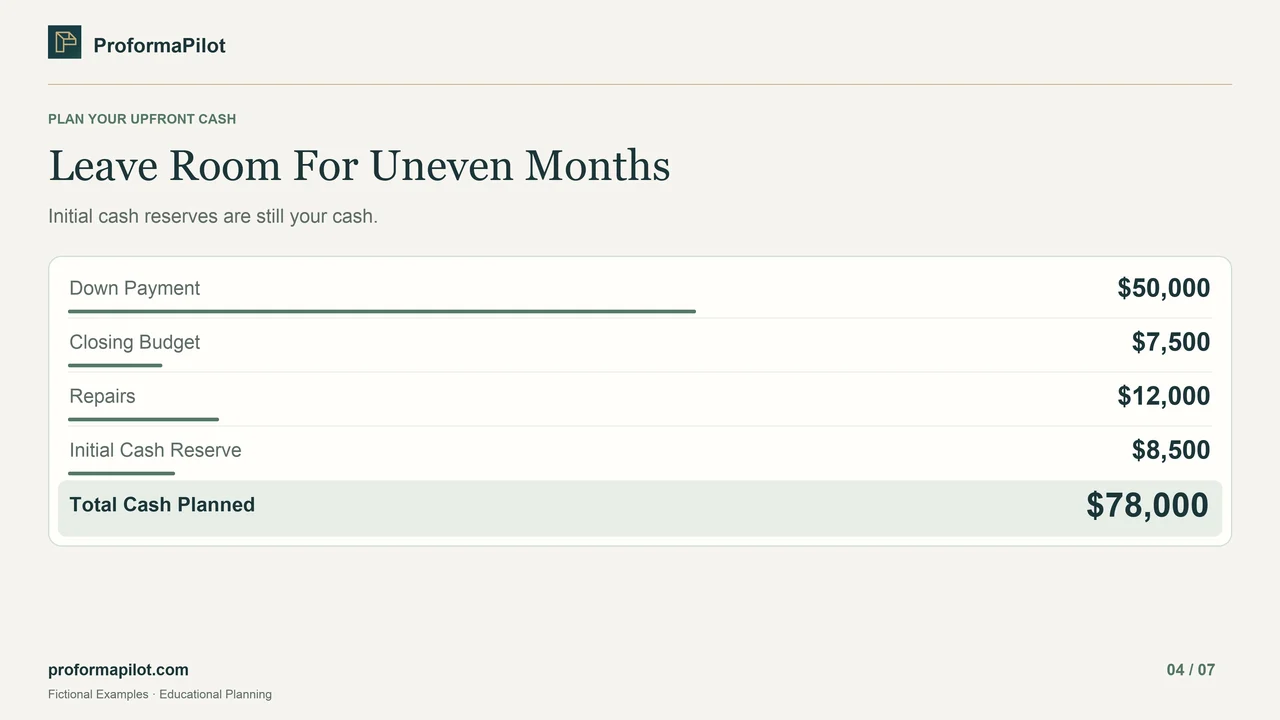
Leave Room For Uneven Months

Leave Room For Uneven Months: Initial cash reserves are still your cash.
Step 4 · Illustrated Overview

We'll also set aside eighty-five hundred dollars as an initial cash reserve. Together, these four amounts add up to seventy-eight thousand. A reserve is a cash buffer, not an extra bill paid to a seller. The amount you need depends on the property, your financing, and your own financial position.

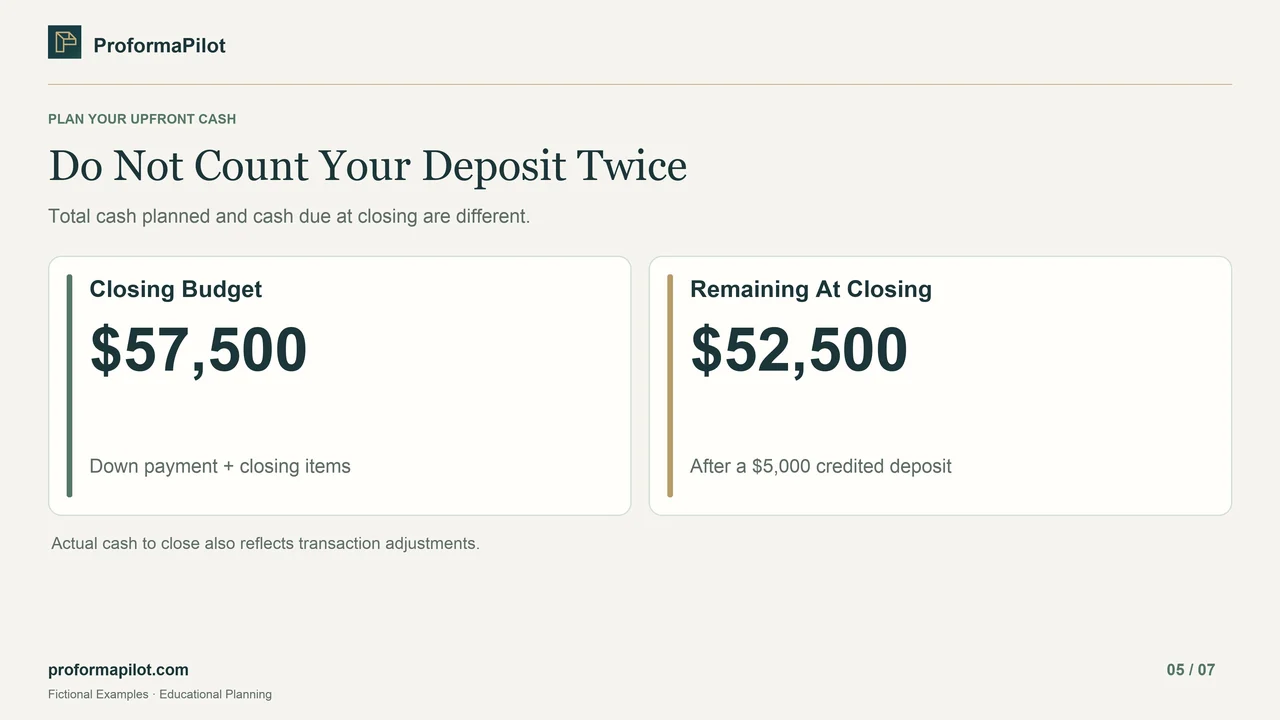
Do Not Count Your Deposit Twice

Do Not Count Your Deposit Twice: Total cash planned and cash due at closing are different.
Step 5 · Illustrated Overview

Suppose you already paid a five-thousand-dollar deposit that will be credited at closing. In this simplified example, the down payment and closing budget total fifty-seven thousand five hundred. After that deposit, fifty-two thousand five hundred remains due at closing. The deposit is part of your original cash plan, not another five thousand on top.

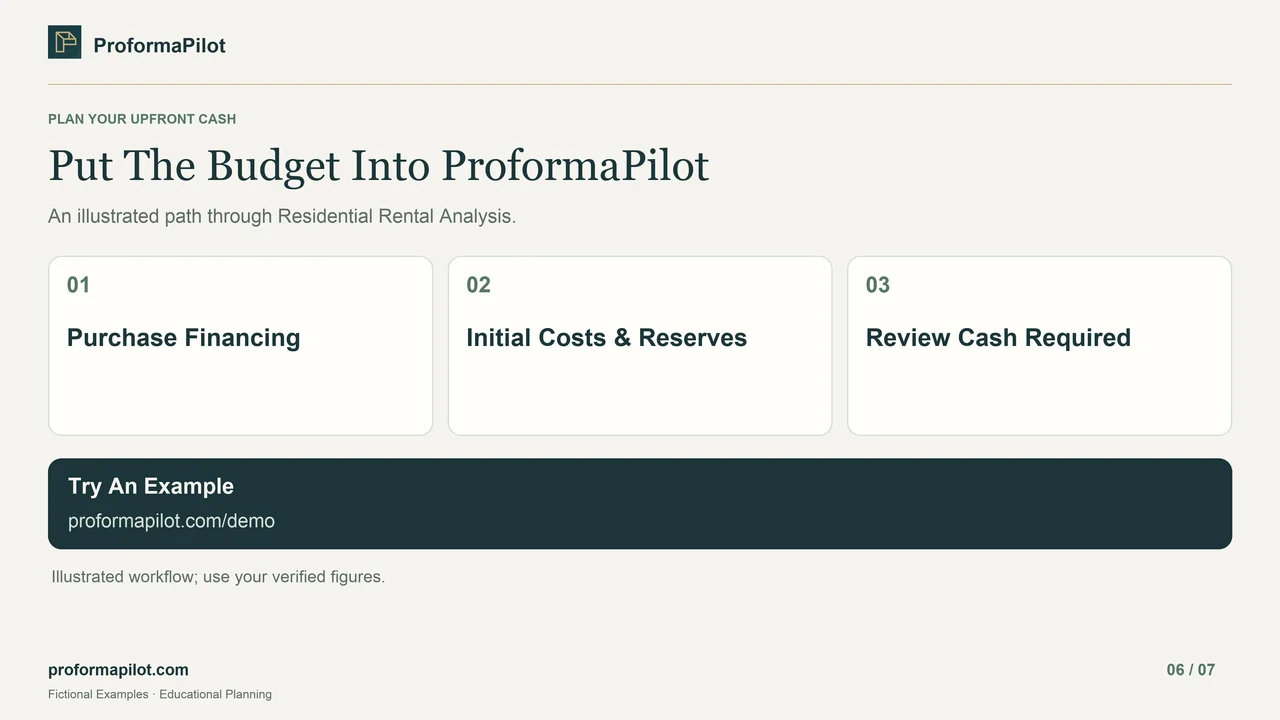
Put The Budget Into ProformaPilot

Put The Budget Into ProformaPilot: Purchase Financing; Initial Costs & Reserves; Review Cash Required
Step 6 · Illustrated Overview

In ProformaPilot, enter the purchase price and down payment under Purchase Financing. Add the closing-cost estimate and initial repair budget. Under Additional Purchase Assumptions, enter your Initial Cash Reserve. Then review Cash Required in the results. Check any holding costs or dwelling project costs, because those can change the total.

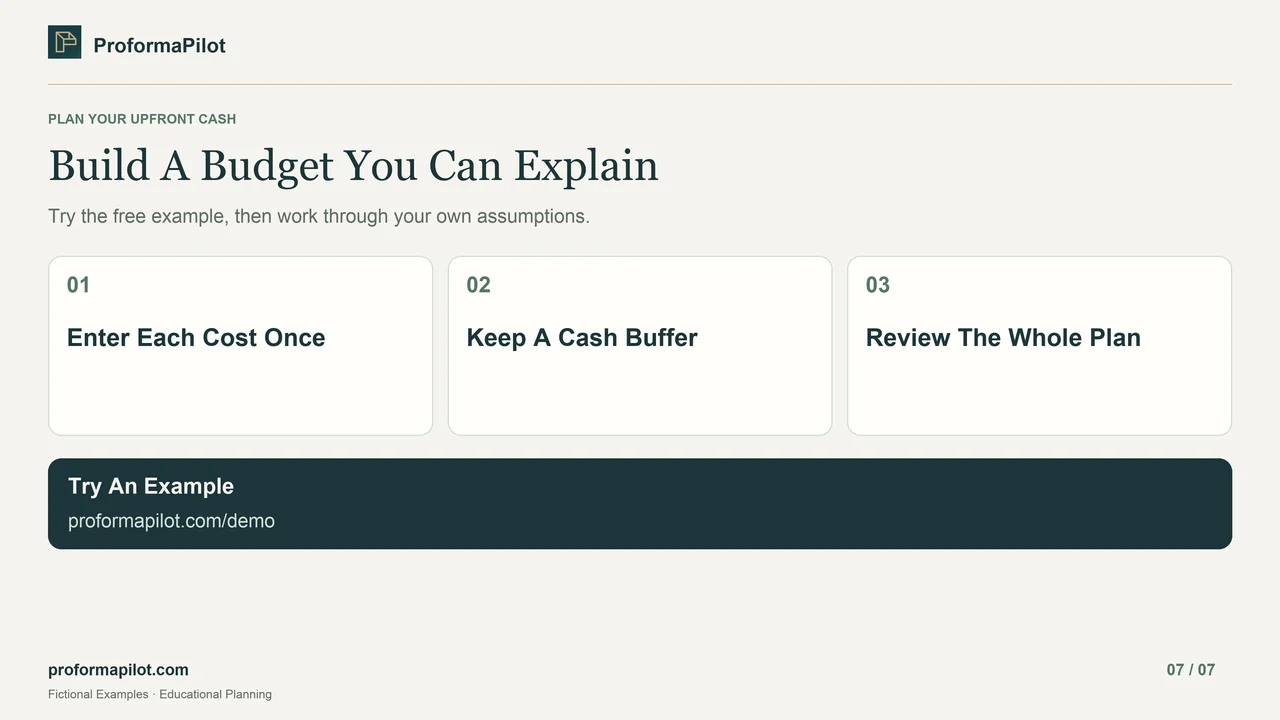
Build A Budget You Can Explain

Build A Budget You Can Explain: Enter Each Cost Once; Keep A Cash Buffer; Review The Whole Plan
Step 7 · Illustrated Overview

Now you have a more complete question: can I fund the purchase, prepare the property, and still keep an appropriate cash buffer? Start with the free example at ProformaPilot dot com slash demo. Replace the assumptions with your estimates, and take the budget to your lender and property professionals before you commit.

Download Transcript

1. The Down Payment Is A Starting Point

Saving for a down payment of fifty thousand dollars? Let's look at the full budget together.

For this fictional rental, our total cash plan is seventy-eight thousand dollars. We'll build that number step by step, so you can see where every part belongs.

2. Start With The Purchase

On a two hundred fifty thousand dollar purchase, twenty percent down is fifty thousand dollars. The remaining two hundred thousand is the purchase loan.

That down payment is cash you commit to the property. It does not include the other costs of getting the rental ready.

3. Add Closing Costs And Repairs

Let's assume seventy-five hundred dollars for closing costs, prepaids, and initial escrow funding, plus twelve thousand for repairs.

Use the lender's documents and contractor estimates to refine those amounts. Include each cost once, and add a repair contingency when your project calls for one.

4. Leave Room For Uneven Months

We'll also set aside eighty-five hundred dollars as an initial cash reserve. Together, these four amounts add up to seventy-eight thousand.

A reserve is a cash buffer, not an extra bill paid to a seller. The amount you need depends on the property, your financing, and your own financial position.

5. Do Not Count Your Deposit Twice

Suppose you already paid a five-thousand-dollar deposit that will be credited at closing.

In this simplified example, the down payment and closing budget total fifty-seven thousand five hundred. After that deposit, fifty-two thousand five hundred remains due at closing. The deposit is part of your original cash plan, not another five thousand on top.

6. Put The Budget Into ProformaPilot

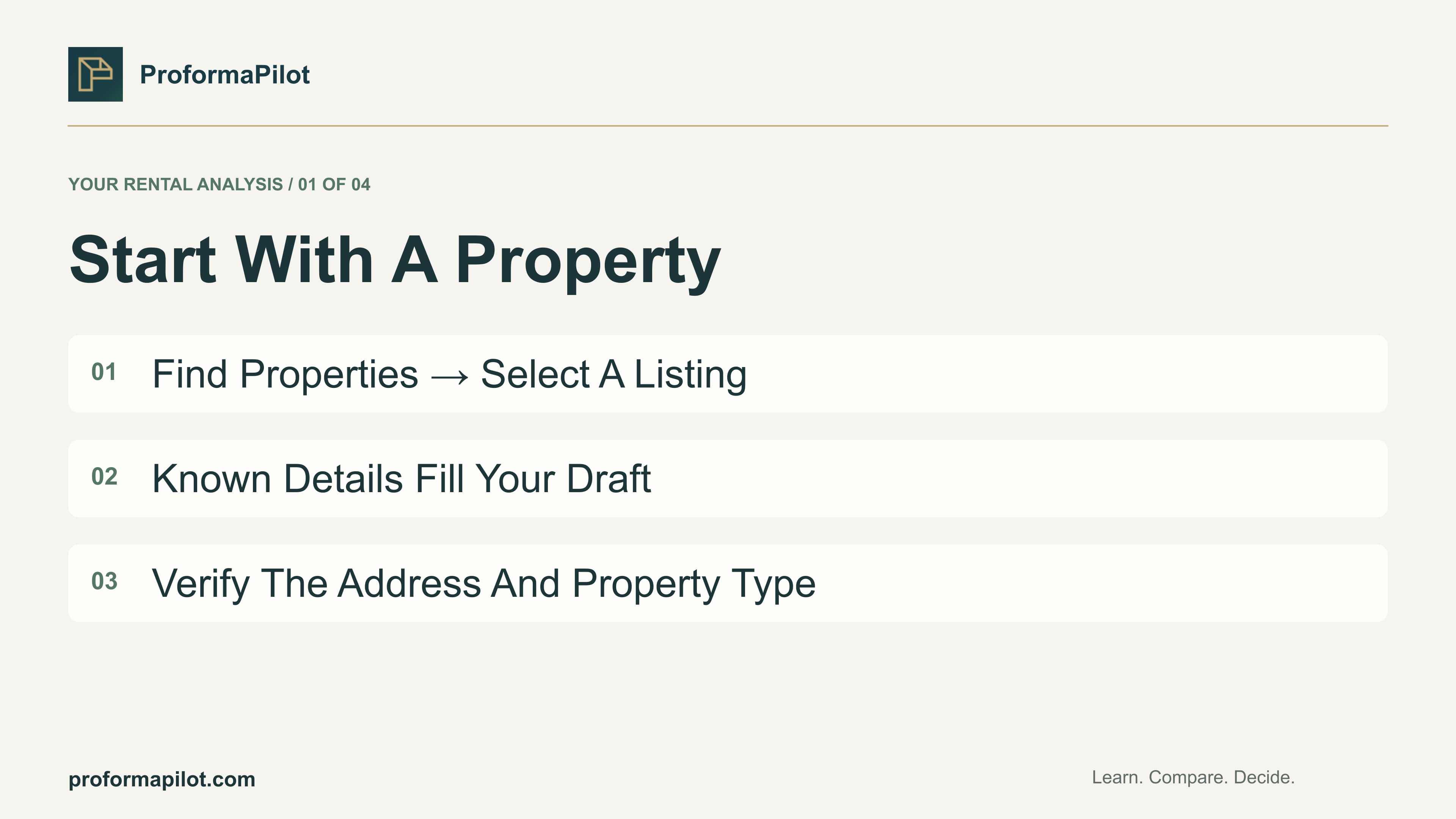
In ProformaPilot, enter the purchase price and down payment under Purchase Financing. Add the closing-cost estimate and initial repair budget.

Under Additional Purchase Assumptions, enter your Initial Cash Reserve. Then review Cash Required in the results. Check any holding costs or dwelling project costs, because those can change the total.

Worked Example

Build The Full Starting Budget

Fictional educational figures before income taxes. Rates, property values, rents, and costs are assumptions, not current market offers. Verify the figures for your own property.

Down Payment
$50,000
Closing Costs
$7,500
Initial Repairs
$12,000
Initial Cash Reserves
$8,500
Total Starting Cash
$78,000
Deposit Already Paid · Included In Down Payment
$5,000
Remaining Down Payment Plus Closing Costs
$52,500

Keep These In Mind

  • Count an earnest-money deposit as part of the purchase funds, not a second down payment.
  • Separate initial reserves from ongoing reserve allowances.
  • Replace assumptions with lender figures, quotes, and property-specific costs.

Further Reading: CFPB: Mortgage Costs And Financing. Use the source to understand the underlying concepts, and confirm actual financing and property requirements with appropriate professionals.
Your Next Chapter

Continue Learning

A few useful lessons to explore next.

Explore All Learning Guides

Privacy Choices

Essential sign-in, payments, security, and usage limits stay on. Your choices apply to this browser for six months. Read Our Privacy Policy

Maps, suggestions, and drafts can also be enabled where you use them. Turning off drafts removes this browser’s recovery copies. Withdrawing maps or tracking reloads the page to stop the service; save any work first.