1. Confirm Recurring Bills
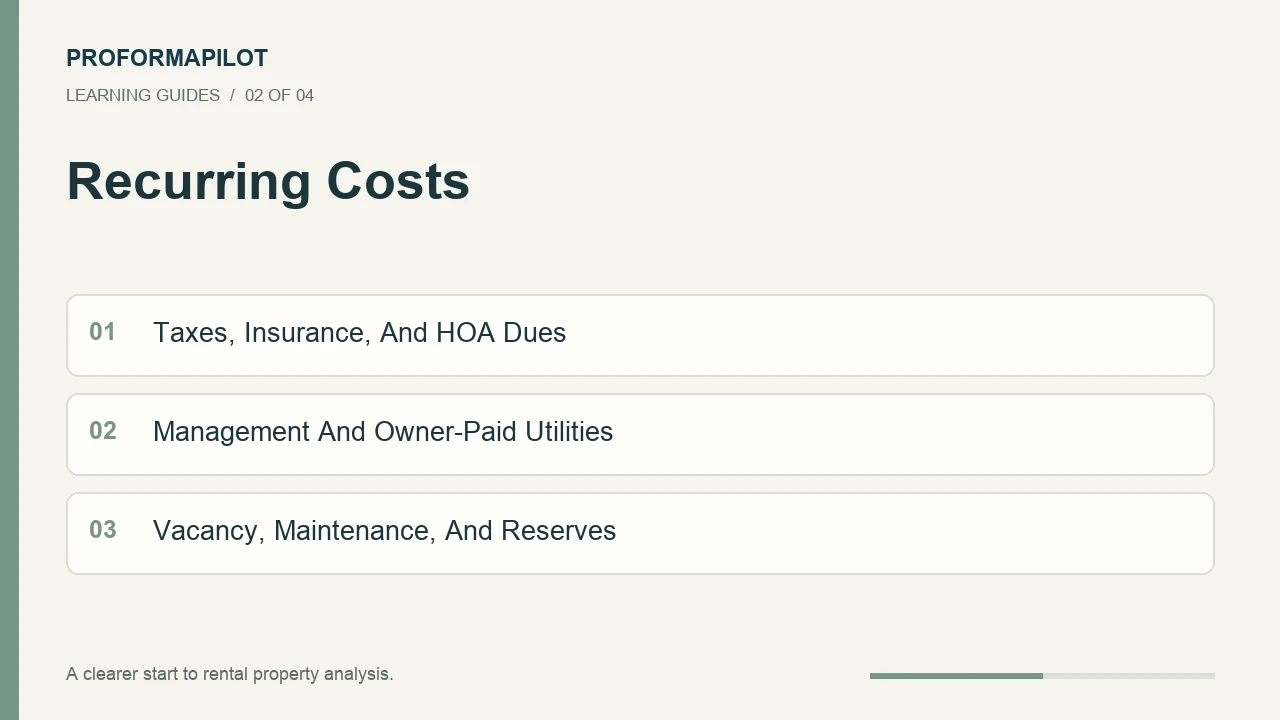
Obtain property-tax estimates appropriate to the purchase and an insurance quote for the property's intended rental use. Record HOA dues and check for known special assessments. Confirm management fees, owner-paid utilities, landscaping, and any other recurring owner obligations.
Check the units used by each field. ProformaPilot asks for annual property tax and insurance, while HOA dues and owner utilities are monthly. Use your actual lender and service-provider figures where available.
- Property taxes and rental-property insurance
- HOA dues and known assessments
- Management and leasing costs
- Owner-paid utilities and other recurring costs
2. Budget For Uneven Costs
Vacancy, maintenance, and capital reserves help you model costs that do not arrive as predictable monthly bills. Choose assumptions suitable for the property's condition and your market; the app's starting percentages are not universal recommendations.
Maintenance covers routine upkeep. Capital reserves make room for larger replacements such as a roof or heating system. A percentage allowance may not capture a known near-term repair, so include that repair in the appropriate initial budget rather than assuming a reserve percentage solves it.
- Vacancy and collection uncertainty
- Routine maintenance
- Larger replacements and capital reserves
- Leasing, turnover, and holding costs where applicable
3. Separate Initial Cash From Ongoing Costs
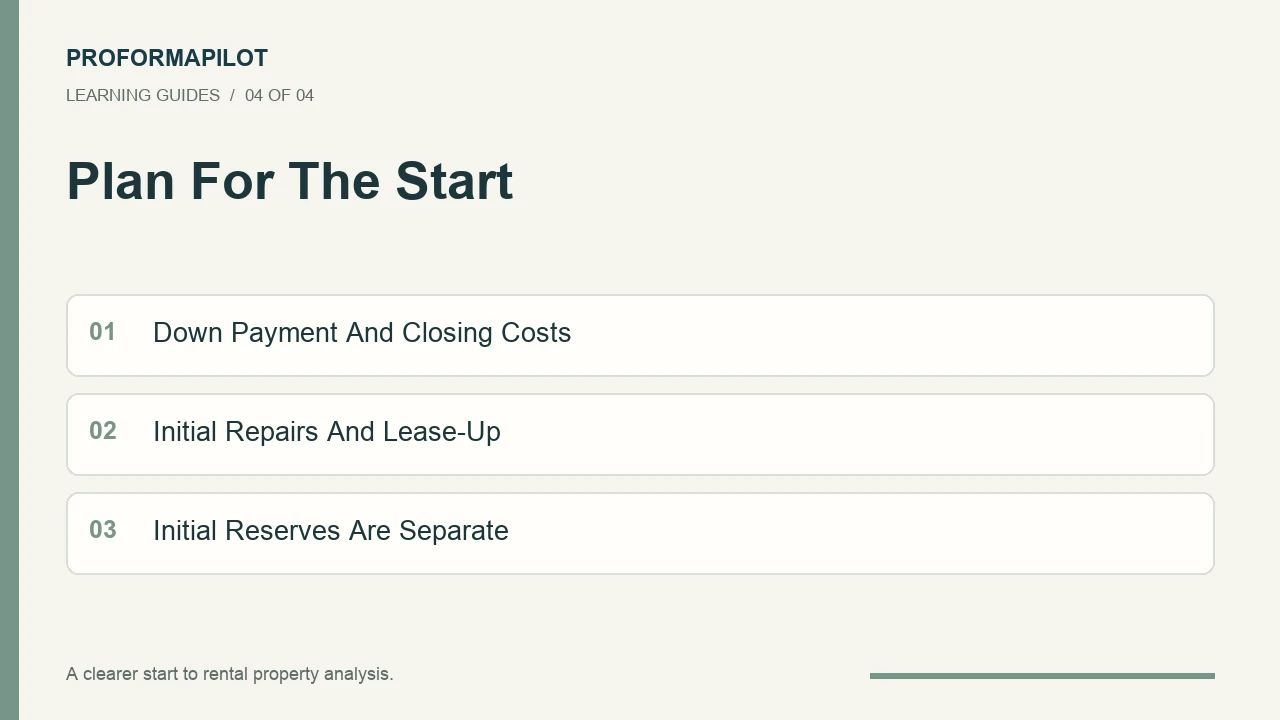
The down payment, closing costs, initial repairs, and lease-up expenses affect the cash needed to begin. Initial reserves are cash set aside at purchase; the ongoing reserve allowance affects your monthly projection. Keep these roles separate.
Loan principal and interest belong in financing. Taxes and insurance belong in their expense fields, even when a lender collects them through escrow. Avoid entering a full escrow-inclusive mortgage payment and then adding the same taxes and insurance again.
4. Keep A Verification List
Mark every unknown amount that still needs a quote, record, inspection, or conversation. Review tenant-paid versus owner-paid obligations and any local rental requirements before committing.
An operating budget is different from a tax return. A reserve allowance is not automatically a deductible expense, and mortgage principal is not mortgage interest. Consult the IRS guidance and a tax professional for your circumstances.
Keep Annual And Monthly Amounts Straight
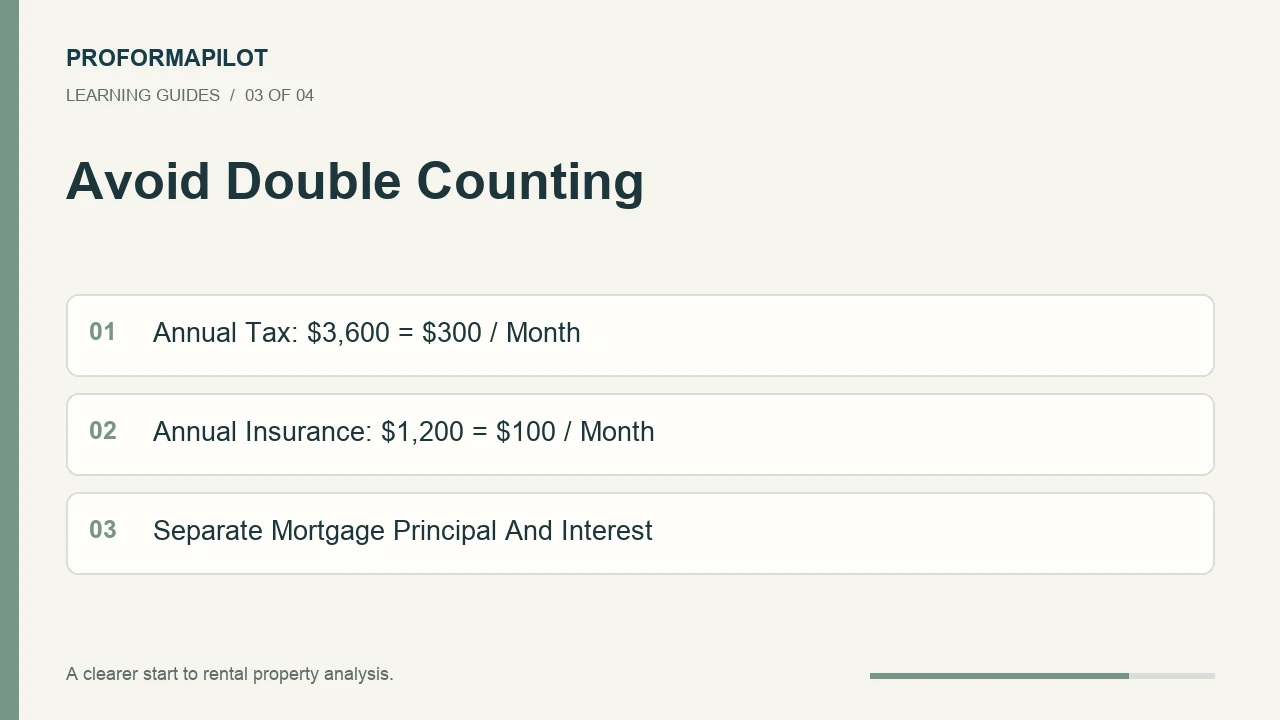
Illustrative conversions. ProformaPilot accepts annual tax and insurance in their labeled annual fields; the monthly amounts below explain their budget impact.
- Property Tax · $3,600 / Year
- $300 / Month
- Insurance · $1,200 / Year
- $100 / Month
- Combined Budget Impact
- $400 / Month
Keep These In Mind
- A missing expense is not automatically zero.
- Separate initial cash needs from ongoing allowances.
- Do not count escrowed taxes and insurance twice.
Further Reading: IRS Publication 527: Residential Rental Property. For tax treatment of rental income, expenses, and depreciation, consult IRS Publication 527. The checklist is for planning cash needs, not determining deductions.