1. What Does Your Cash Earn?
Two rentals can produce the same monthly cash flow and still use very different amounts of your cash.
Let's explore cash-on-cash return together. It compares a year's modeled cash flow with the upfront cash committed to the deal. We'll use a fictional example, so the math stays easy to follow.
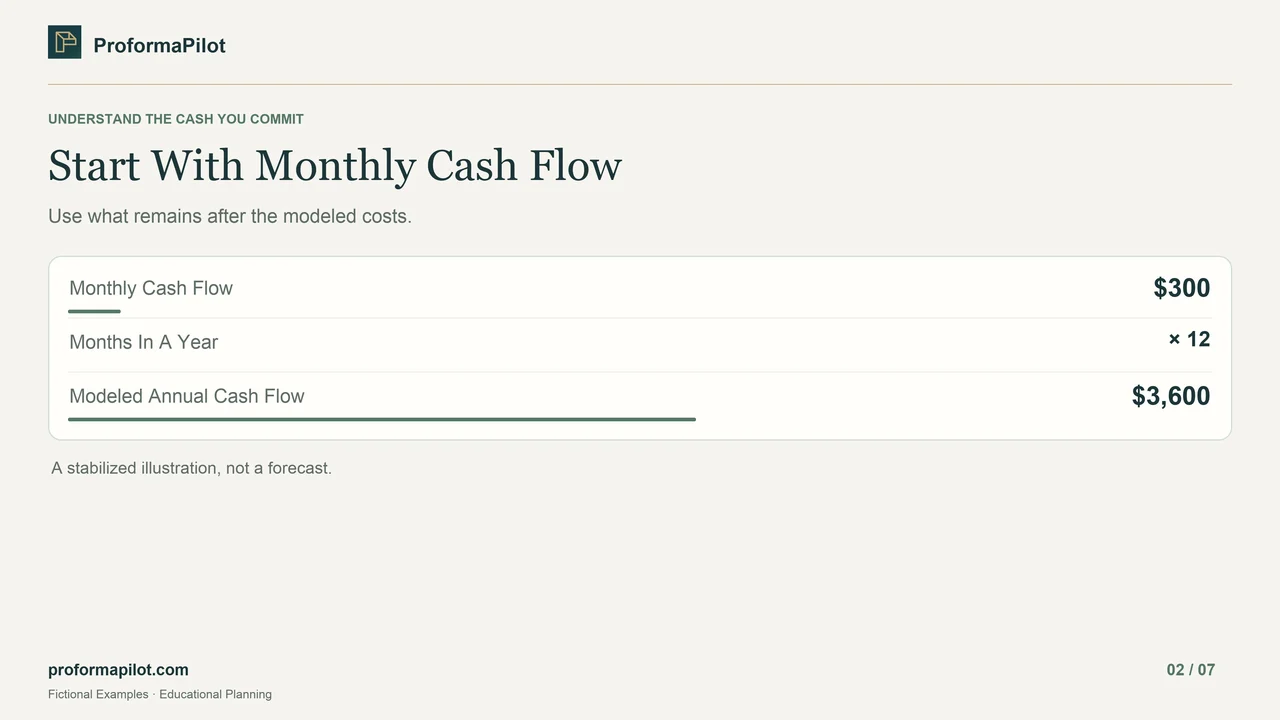
2. Start With Monthly Cash Flow
Suppose your rental analysis shows three hundred dollars a month after vacancy, operating expenses, ongoing reserves, and financing.
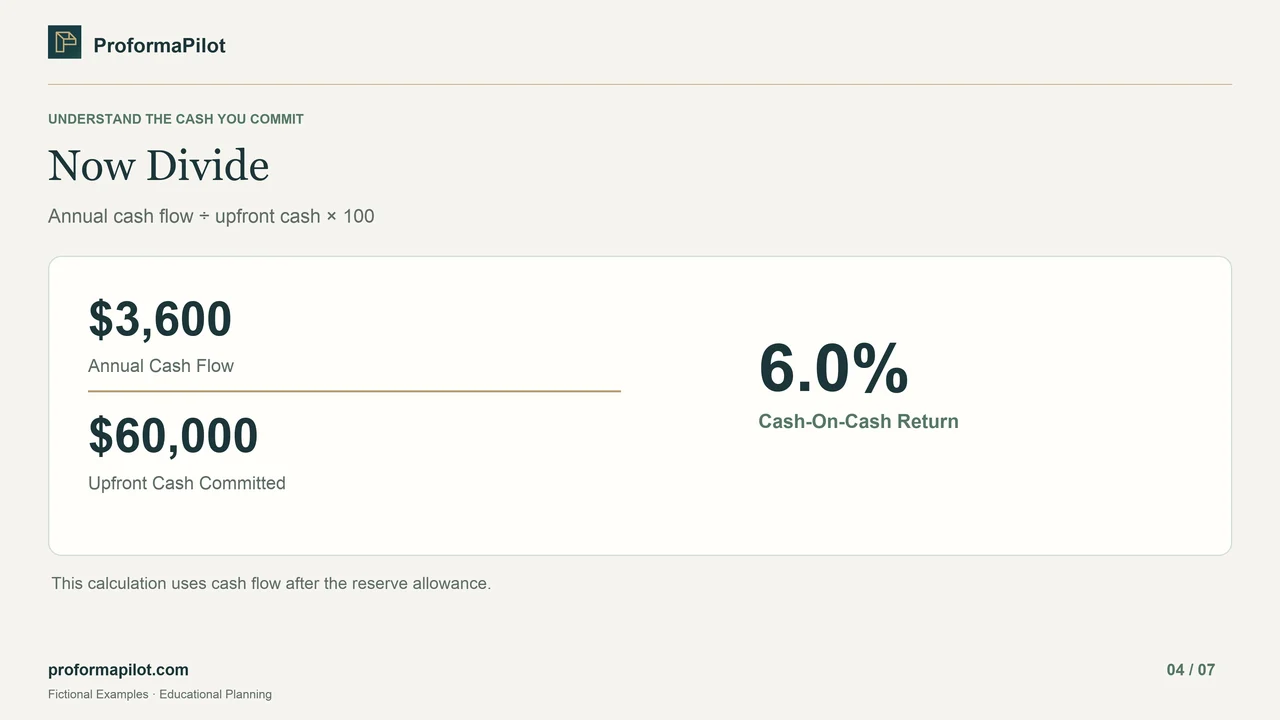
Multiplying by twelve gives thirty-six hundred dollars of modeled annual cash flow. We are using the same monthly assumption all year. Actual collections and repairs may arrive unevenly.
3. Use The Whole Cash Commitment
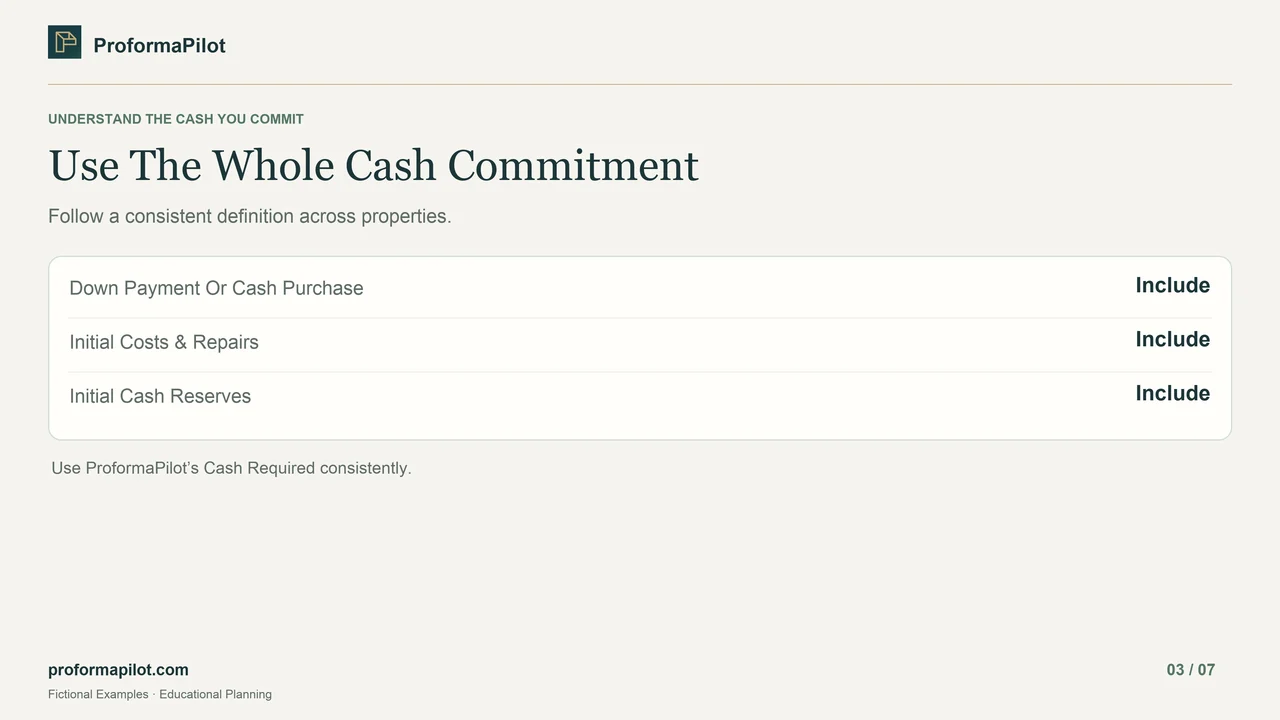
For this example, the upfront cash commitment is sixty thousand dollars. In ProformaPilot, Cash Required includes the down payment or cash purchase, initial costs, and initial reserves.
Check that repairs and any dwelling project budgets are included. Comparing a complete budget with another property's down payment alone would give a misleading comparison.
4. Now Divide
Divide thirty-six hundred by sixty thousand, then multiply by one hundred. The modeled cash-on-cash return is six percent.
That means the annual operating cash flow in this example equals six percent of the upfront cash commitment. It does not mean the property itself increased in value by six percent.
5. Same Cash Flow, Different Cash Needed
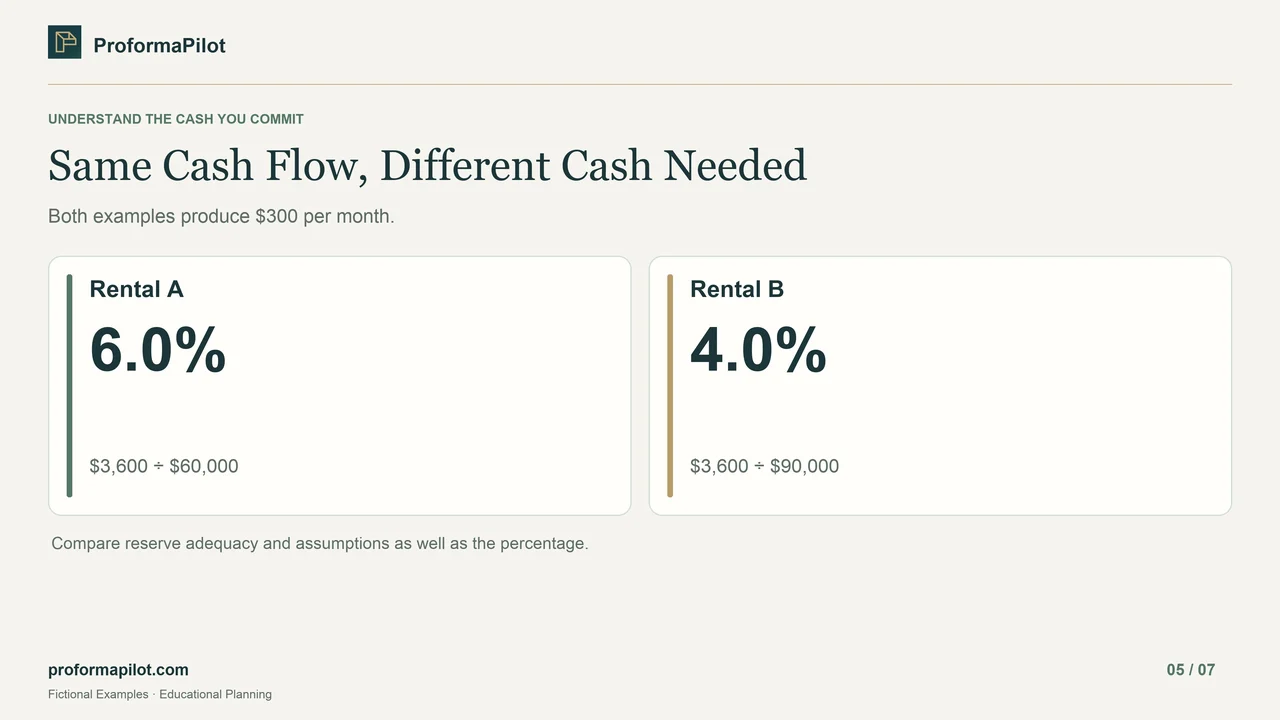
Now compare Rental A, which needs sixty thousand dollars upfront, with Rental B, which needs ninety thousand. Each produces the same thirty-six hundred a year.
Rental A shows six percent. Rental B shows four percent. That is a useful distinction, but it does not tell us which property has the better condition, location, or risk profile.
6. Know What This Metric Leaves Out
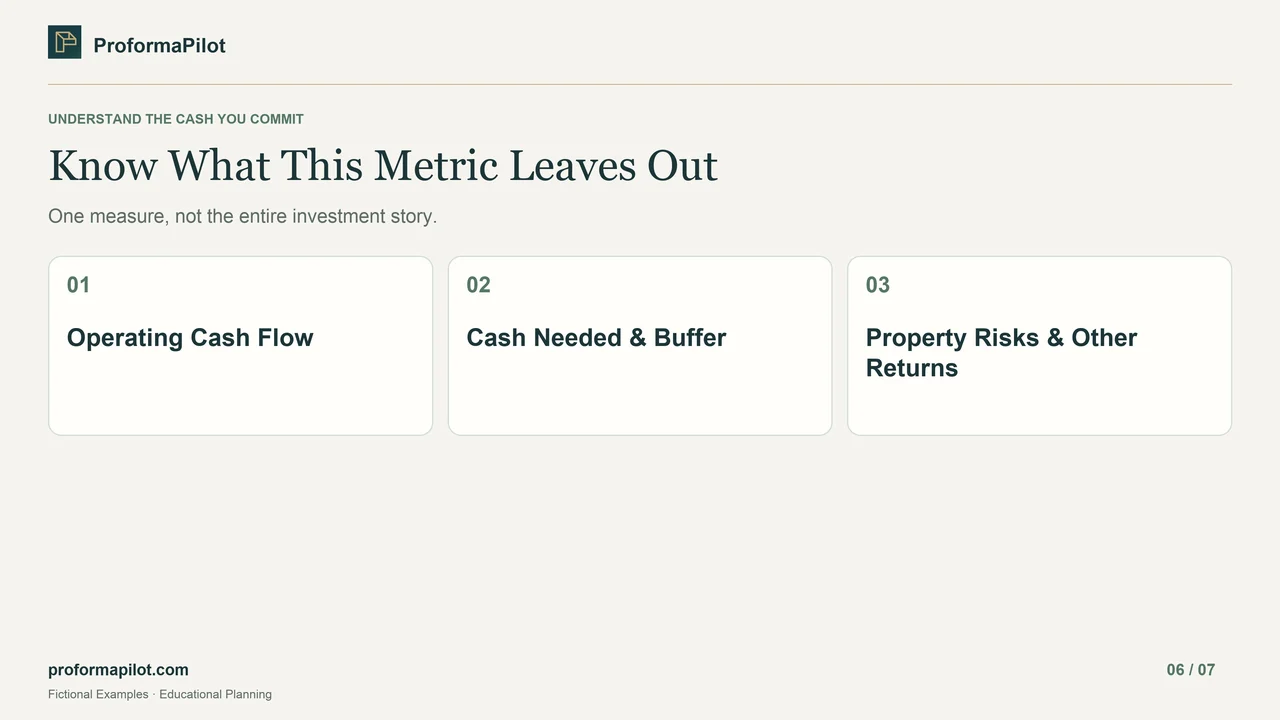
Cash-on-cash return here does not include appreciation, principal paydown, income-tax effects, or proceeds from selling the property.
It can also change sharply when you change the financing or reduce your cash buffer. A higher percentage is not automatically a safer investment. Review the monthly cash flow and cash needed alongside it.
Same Cash Flow, Different Cash Commitment
Fictional educational figures before income taxes. Rates, property values, rents, and costs are assumptions, not current market offers. Verify the figures for your own property.
- Monthly Cash Flow · Both Rentals
- $300
- Annual Cash Flow · Both Rentals
- $3,600
- Rental A · Upfront Cash / Return
- $60,000 / 6%
- Rental B · Upfront Cash / Return
- $90,000 / 4%
Keep These In Mind
- Use a consistent definition of upfront cash when comparing properties.
- Cash-on-cash return excludes appreciation, principal paydown, income-tax effects, and sale proceeds.
- Review the cash buffer and property risks alongside the percentage.
Further Reading: CFPB: Mortgage Costs And Financing. Use the source to understand the underlying concepts, and confirm actual financing and property requirements with appropriate professionals.