← Learning Guides
A Clearer Start

What Changes When You Refinance?

Cash released at refinance and monthly cash flow answer different questions. Compare both before deciding whether a new loan fits your property budget.

4K Available · Captions Optional

Short Guided Video · Optional English Captions · Illustrative Examples

Read The Video Transcript

A New Loan Changes More Than The Rate

A New Loan Changes More Than The Rate: Let’s compare the cash and the monthly payment.
Step 1 · Illustrated Overview

A refinance can change the loan balance, payment, upfront costs, and cash you receive. A lower interest rate alone does not tell the whole story. Let's explore a fictional cash-out scenario in ProformaPilot. We'll keep rental income and operating costs unchanged, so we can see the effect of the financing itself.

Set The Starting Point

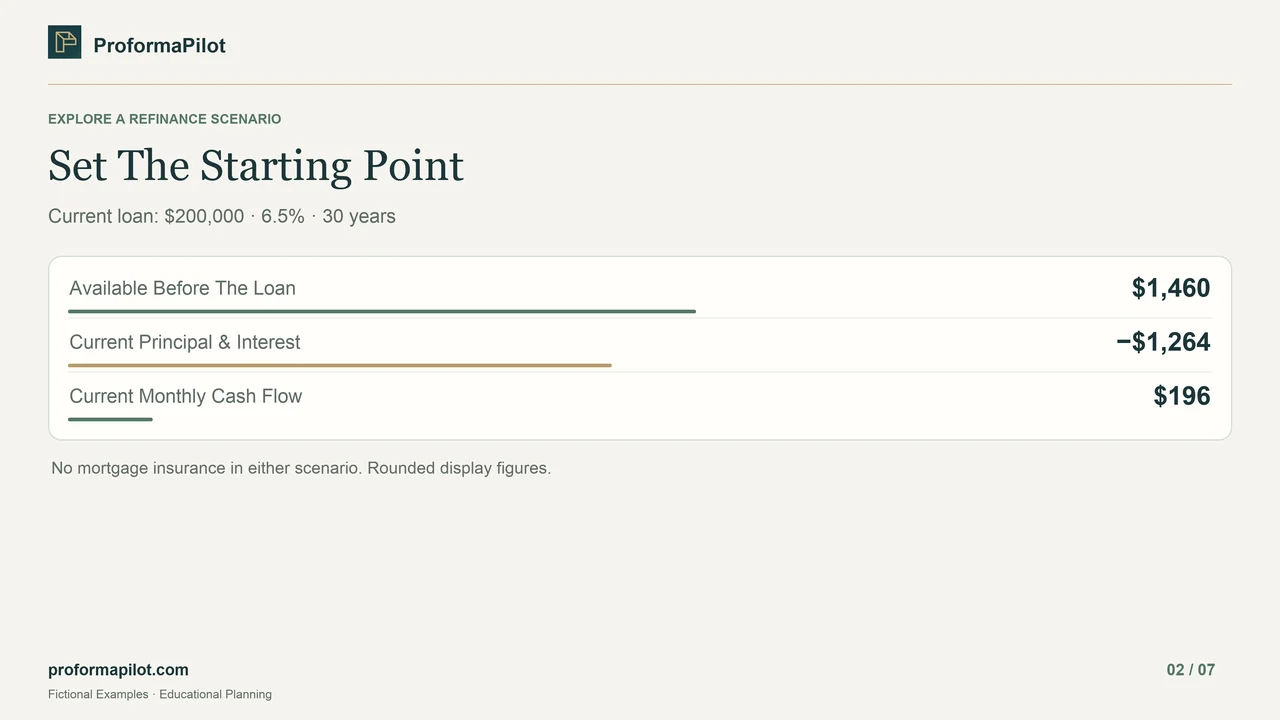
Set The Starting Point: Current loan: $200,000 · 6.5% · 30 years
Step 2 · Illustrated Overview

Our starting loan is two hundred thousand dollars, at an assumed six point five percent for thirty years. Principal and interest are about twelve hundred sixty-four dollars a month. Suppose the property has fourteen hundred sixty dollars available each month after operating costs and reserves, before the loan. The starting cash flow is about one hundred ninety-six dollars.

Define The Possible New Loan

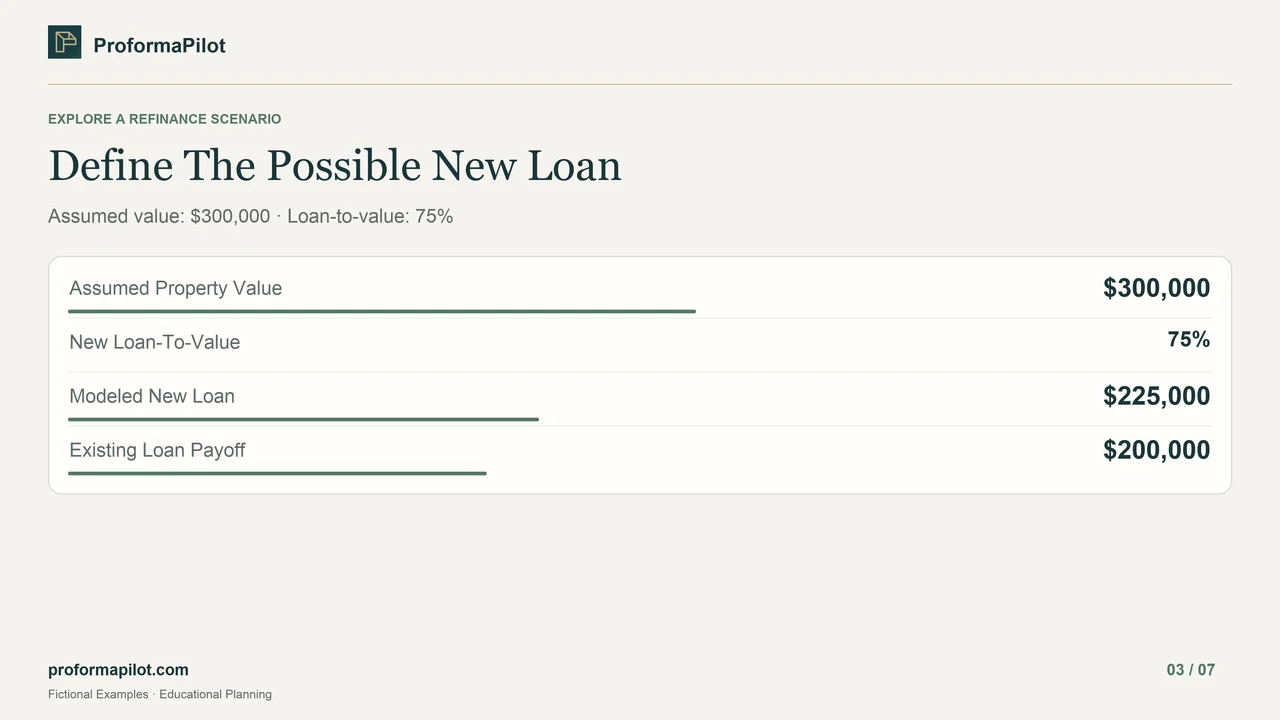
Define The Possible New Loan: Assumed value: $300,000 · Loan-to-value: 75%
Step 3 · Illustrated Overview

For the refinance scenario, we enter an assumed property value of three hundred thousand dollars and a seventy-five percent loan-to-value ratio. That models a new loan of two hundred twenty-five thousand. We enter the current payoff as two hundred thousand. This value is a scenario input, not a prediction of appreciation or an appraised value.

Subtract The Payoff And Closing Costs

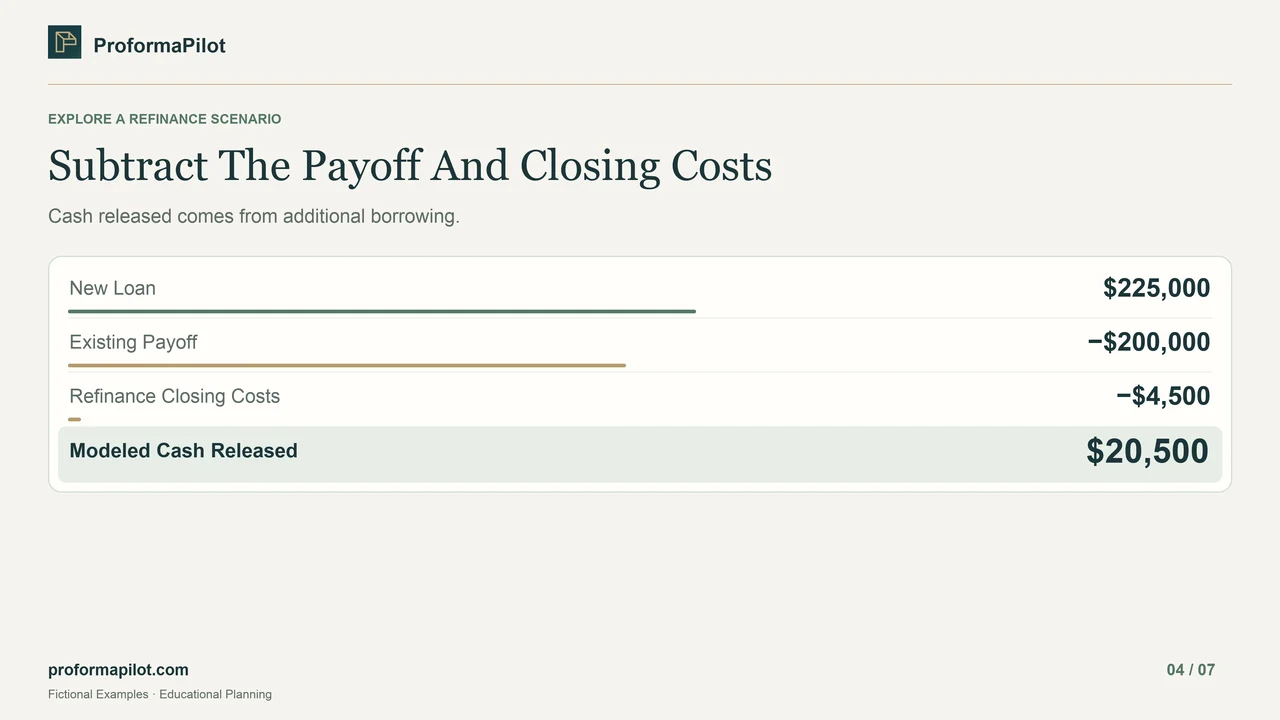
Subtract The Payoff And Closing Costs: Cash released comes from additional borrowing.
Step 4 · Illustrated Overview

Assume refinance closing costs equal two percent of the new loan, or forty-five hundred dollars. Subtract the two-hundred-thousand-dollar payoff and those costs from the new loan. The modeled cash released is twenty thousand five hundred dollars. That is borrowed cash, not rental profit. If the deductions exceed the new loan, additional cash would be required.

A Lower Rate, A Higher Payment

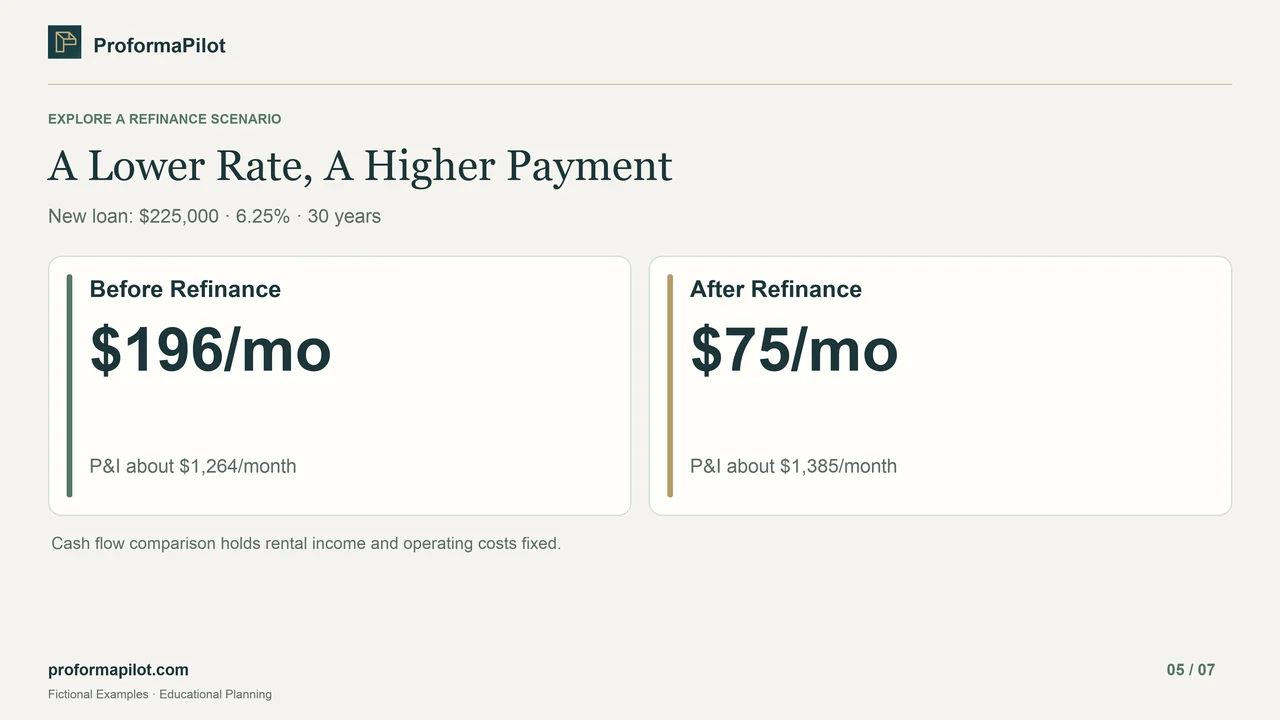
A Lower Rate, A Higher Payment: New loan: $225,000 · 6.25% · 30 years
Step 5 · Illustrated Overview

Now assume the new loan has a six point two five percent rate and a fresh thirty-year term. Even with that lower rate, the larger balance raises principal and interest to about thirteen hundred eighty-five dollars. With the same rental budget, monthly cash flow falls from about one hundred ninety-six dollars to seventy-five. We released cash upfront, but reduced the monthly cushion.

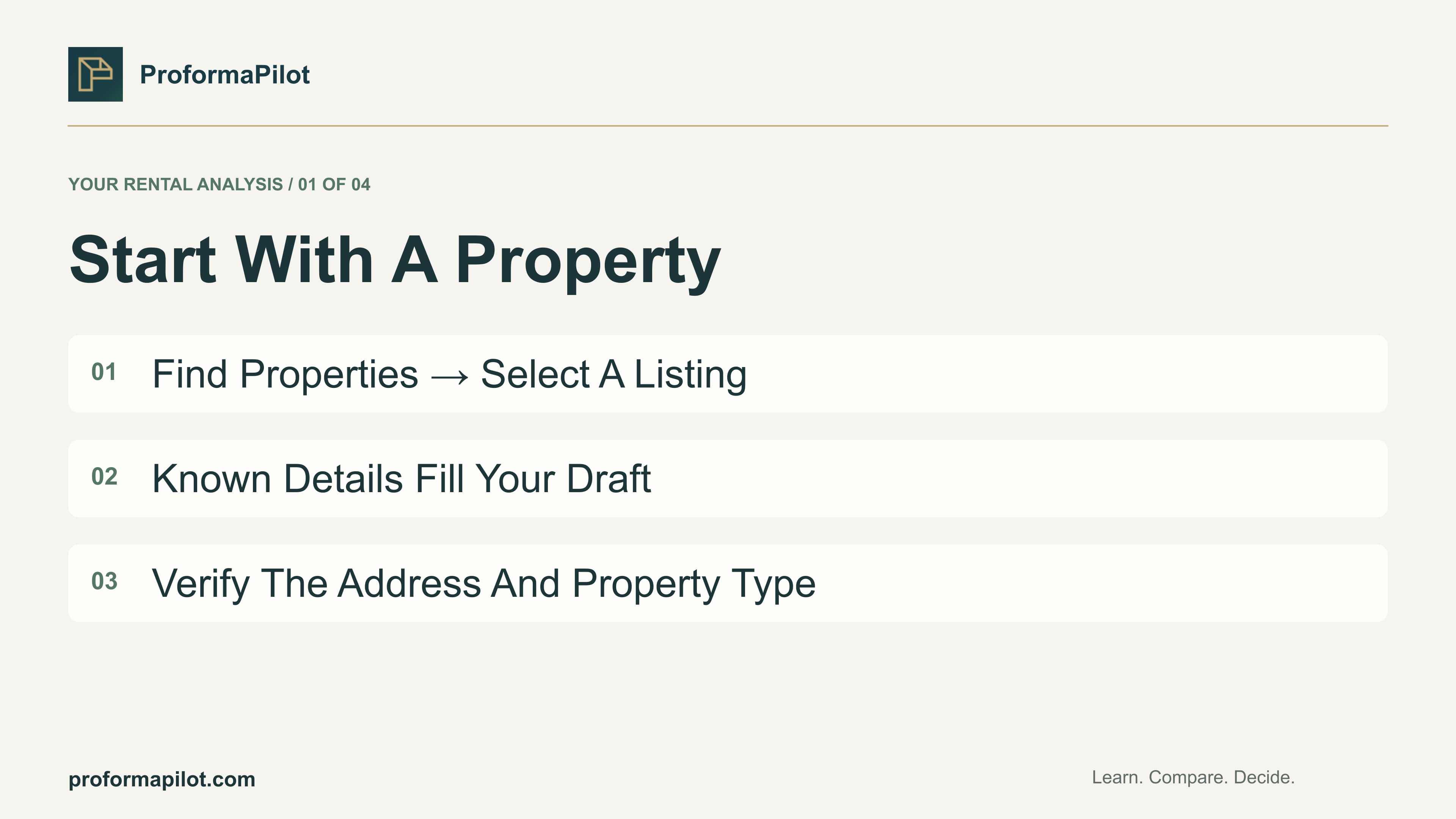
Enter The Scenario In ProformaPilot

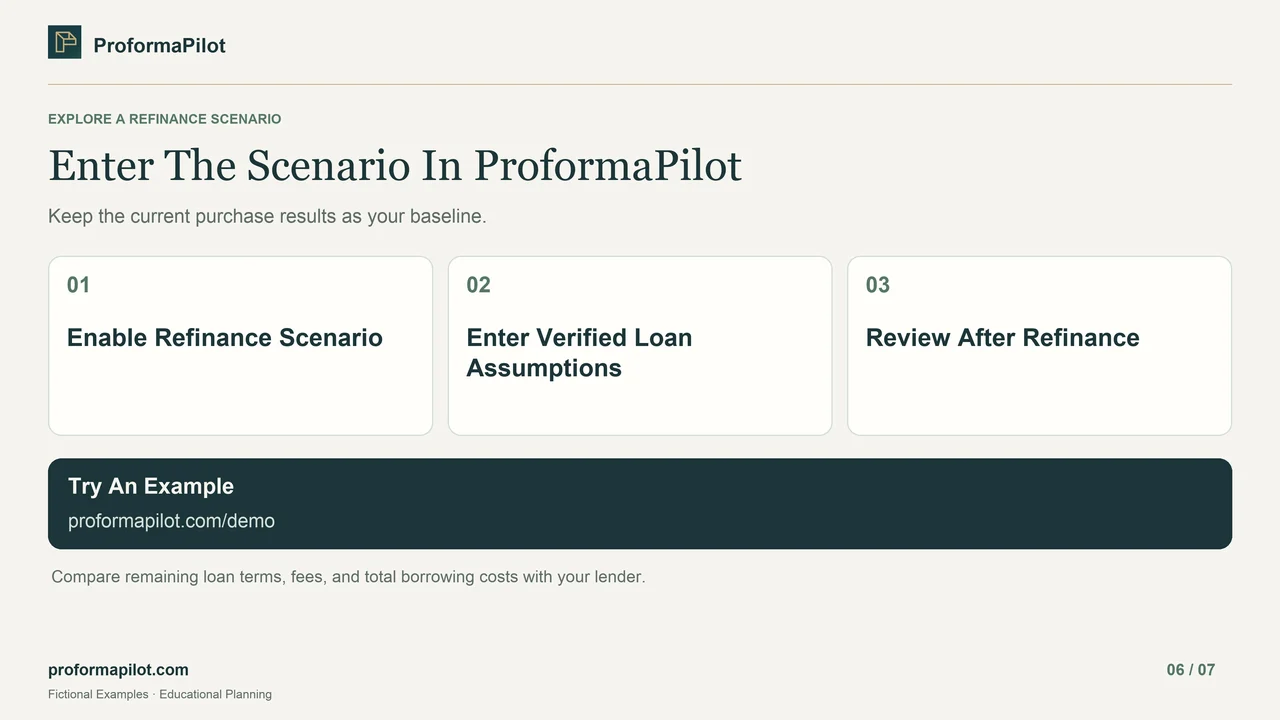
Enter The Scenario In ProformaPilot: Enable Refinance Scenario; Enter Verified Loan Assumptions; Review After Refinance
Step 6 · Illustrated Overview

Under Refinance Scenario, enable Compare A Possible Refinance. Enter the property value, expected payoff, loan-to-value, rate, term, closing costs, and any mortgage insurance. Review After Refinance in the results. Update the payoff yourself for your scenario. ProformaPilot does not automatically assume future appreciation or loan paydown.

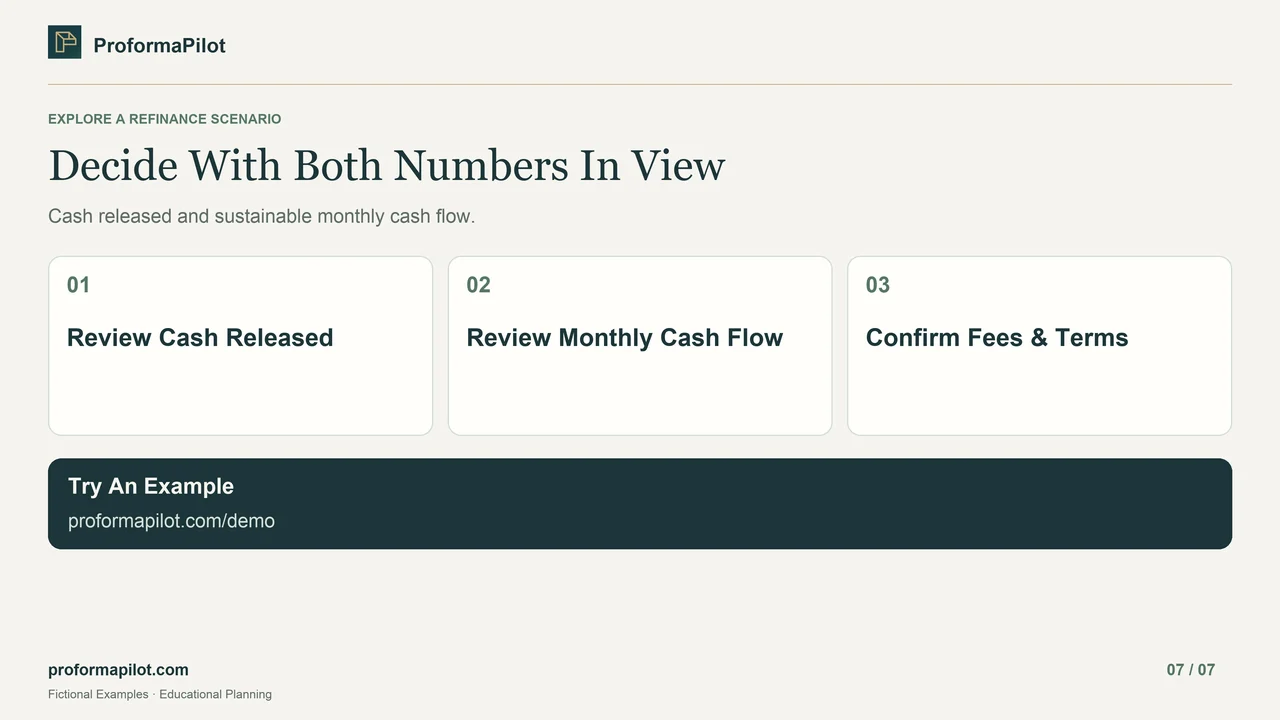
Decide With Both Numbers In View

Decide With Both Numbers In View: Review Cash Released; Review Monthly Cash Flow; Confirm Fees & Terms
Step 7 · Illustrated Overview

Ask how the new payment fits the rental budget, what the fees cost, and how a new term changes the borrowing timeline. A lower payment can also come from stretching repayment over more years. Try the free example at ProformaPilot dot com slash demo. Model the possibilities, then confirm the valuation, payoff, and loan terms with your lender.

Download Transcript

1. A New Loan Changes More Than The Rate

A refinance can change the loan balance, payment, upfront costs, and cash you receive. A lower interest rate alone does not tell the whole story.

Let's explore a fictional cash-out scenario in ProformaPilot. We'll keep rental income and operating costs unchanged, so we can see the effect of the financing itself.

2. Set The Starting Point

Our starting loan is two hundred thousand dollars, at an assumed six point five percent for thirty years. Principal and interest are about twelve hundred sixty-four dollars a month.

Suppose the property has fourteen hundred sixty dollars available each month after operating costs and reserves, before the loan. The starting cash flow is about one hundred ninety-six dollars.

3. Define The Possible New Loan

For the refinance scenario, we enter an assumed property value of three hundred thousand dollars and a seventy-five percent loan-to-value ratio.

That models a new loan of two hundred twenty-five thousand. We enter the current payoff as two hundred thousand. This value is a scenario input, not a prediction of appreciation or an appraised value.

4. Subtract The Payoff And Closing Costs

Assume refinance closing costs equal two percent of the new loan, or forty-five hundred dollars.

Subtract the two-hundred-thousand-dollar payoff and those costs from the new loan. The modeled cash released is twenty thousand five hundred dollars. That is borrowed cash, not rental profit. If the deductions exceed the new loan, additional cash would be required.

5. A Lower Rate, A Higher Payment

Now assume the new loan has a six point two five percent rate and a fresh thirty-year term. Even with that lower rate, the larger balance raises principal and interest to about thirteen hundred eighty-five dollars.

With the same rental budget, monthly cash flow falls from about one hundred ninety-six dollars to seventy-five. We released cash upfront, but reduced the monthly cushion.

6. Enter The Scenario In ProformaPilot

Under Refinance Scenario, enable Compare A Possible Refinance. Enter the property value, expected payoff, loan-to-value, rate, term, closing costs, and any mortgage insurance.

Review After Refinance in the results. Update the payoff yourself for your scenario. ProformaPilot does not automatically assume future appreciation or loan paydown.

Worked Example

Compare Cash Released And Monthly Cash Flow

Fictional educational figures before income taxes. Rates, property values, rents, and costs are assumptions, not current market offers. Verify the figures for your own property.

Assumed Property Value
$300,000
New Loan At 75% LTV
$225,000
Existing Loan Payoff
−$200,000
Refinance Fees
−$4,500
Illustrative Cash Released
$20,500
Monthly Principal And Interest · Before / After
About $1,264 / $1,385
Monthly Cash Flow · Before / After
About $196 / $75

Keep These In Mind

  • Cash released through a loan is borrowing, not rental income.
  • Include closing costs, the new payment, and monthly cash flow.
  • Confirm property value, rates, fees, and eligibility with your lender.

Further Reading: CFPB: Mortgage Costs And Financing. Use the source to understand the underlying concepts, and confirm actual financing and property requirements with appropriate professionals.
Your Next Chapter

Continue Learning

A few useful lessons to explore next.

Explore All Learning Guides

Privacy Choices

Essential sign-in, payments, security, and usage limits stay on. Your choices apply to this browser for six months. Read Our Privacy Policy

Maps, suggestions, and drafts can also be enabled where you use them. Turning off drafts removes this browser’s recovery copies. Withdrawing maps or tracking reloads the page to stop the service; save any work first.